
PMI San Tan | Eric DeBoer, Designated Broker
Gilbert HOA boards should expect professional management to bring clear financial reporting, organized maintenance, reliable homeowner communication, and consistent follow-through. Just as important, the board should know which decisions remain with its directors and which tasks the manager is authorized to handle.
The best starting point is a written scope of work. “Full-service management” means little unless the agreement explains what gets done, how often, who approves spending, and how the board can see progress. Here is what to look for when hiring a manager or reviewing your current arrangement.
1. A Clear Division Between Board Decisions and Management Work
The management company supports the association within its agreement and delegated authority. The board continues to govern under the community’s documents and applicable law, with some decisions reserved to homeowners.
For example, a manager may gather landscape proposals, compare the scopes, and track performance after approval. The board should understand who selects the contractor, signs the agreement, and approves additional work. PMI San Tan’s board member resources describe this distinction between board decisions and management support.
Before signing, clarify:
- Who can authorize routine repairs and emergency work?
- Which expenses require a board vote or another approval?
- Who handles homeowner questions, architectural submissions, and vendor follow-up?
- Who provides coverage when the assigned manager is unavailable?
HOA management and rental management are different services. Managing association common areas and assessments does not automatically include leasing an individual owner’s home or arranging repairs inside it.
2. Financial Reports That Help the Board Make Decisions
A useful monthly financial package should help directors understand cash balances, unpaid assessments, bills, reserve activity, and differences between actual spending and the budget. Agree on a delivery schedule and ask to see a sample package before hiring.
Numbers need context. If irrigation repairs exceed the budget, the board should be able to tell whether the cause was a one-time failure, repeated repairs, or work that needs a longer-term replacement plan.
As a management best practice, ask for explanations of significant budget differences and a list of upcoming expenses requiring decisions. Review reserve funding alongside operating needs so today’s landscaping bill does not obscure tomorrow’s major repair.
There is also a separate legal requirement for Arizona planned communities: A.R.S. § 33-1810 requires an annual financial audit, review, or compilation, unless the community documents require an annual CPA audit. Completion is due within 180 days after fiscal year-end, with availability to members upon request within 30 days after completion. Monthly management reports do not replace this requirement.
3. Maintenance Planning That Fits Gilbert
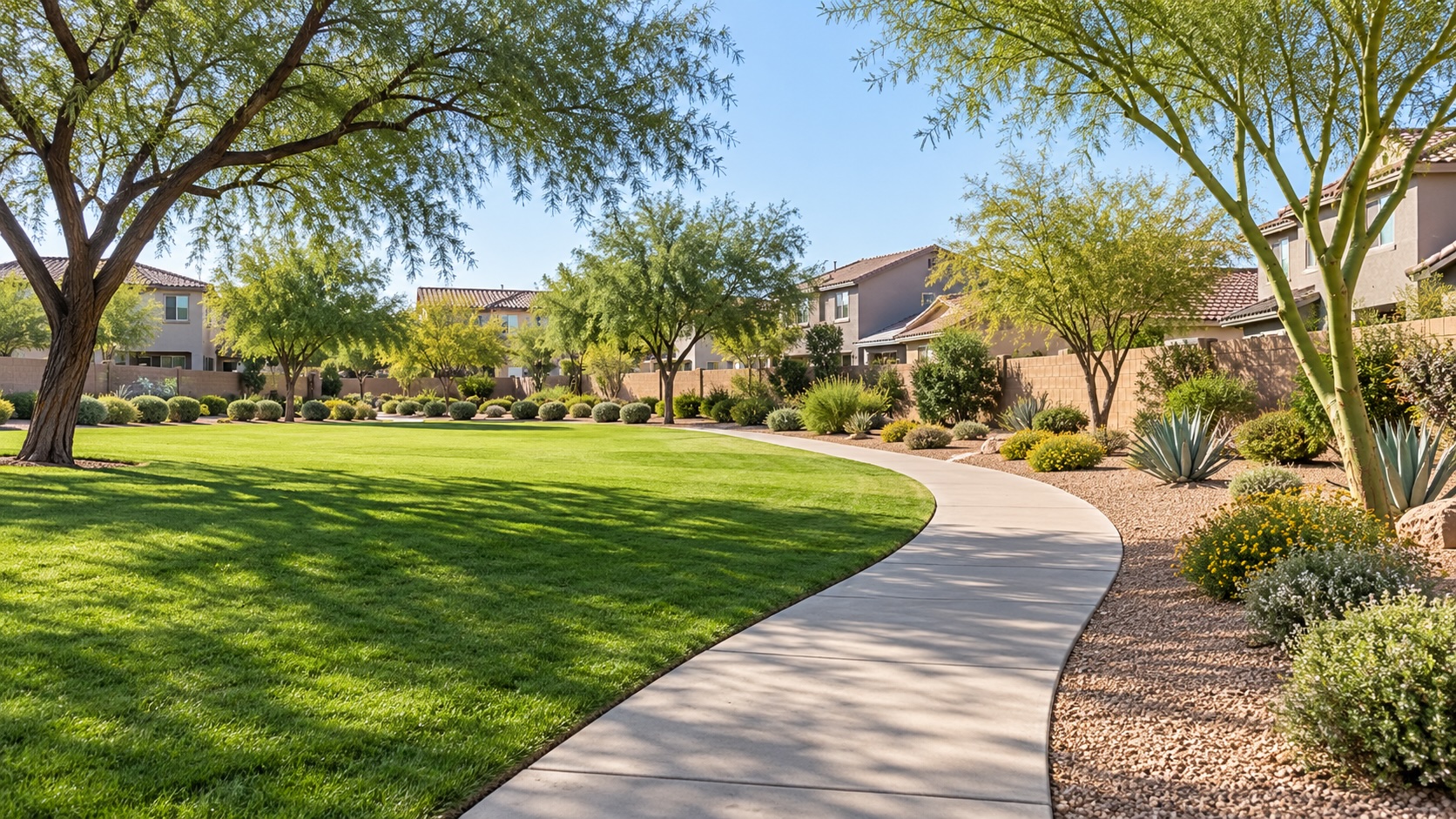
For a Gilbert community with irrigated common areas, landscape oversight should include water use as well as appearance. A green lawn does not tell the board whether irrigation is operating efficiently.
The Town’s Water Wise Gilbert program offers eligible large-landscape customers site-specific water budgets through Waterfluence. Those budgets account for landscape types, area, and weather, with comparisons updated monthly. Gilbert recommends involving the landscape contractor and HOA board alongside the community manager.
Ask a prospective manager how they would help your board use that information. Who reviews unusual consumption? Who contacts the landscaper? Who tracks whether corrective work actually resolves the problem?
Hypothetical example: A Gilbert HOA sees water use rise even though its landscaped area has not changed. The manager checks billing periods and usage, asks the landscaper to inspect irrigation settings and leaks, obtains any needed repair proposal, and reports the result. The board receives a documented explanation rather than simply approving a larger bill.
For other assets, build the maintenance schedule around what the association actually owns or maintains: gates, walls, lighting, pools, private pavement, or drainage areas. Confirm responsibility from governing documents, plats, and agreements before assigning work.
4. Organized Meetings and Accessible Records
Meeting support should cover notices, agendas, supporting documents, minutes, and tracking the actions assigned afterward.
For planned communities after declarant control ends, A.R.S. § 33-1804 generally requires at least 48 hours’ advance notice and an agenda for board meetings, subject to emergency provisions. The statute also protects homeowner participation and limits closed sessions. Informal workshops involving a board quorum can trigger these requirements even when no vote is taken.
Under A.R.S. § 33-1805, planned-community associations have ten business days to fulfill records-examination requests or provide requested copies, subject to statutory exceptions. A portal is useful, but the association also needs a process for receiving requests, checking protected information, and meeting deadlines.
Condominiums have separate provisions, including § 33-1248 for meetings and § 33-1258 for records. The manager should identify the correct framework and involve association counsel when interpretation is needed.
5. Consistent Communication and Documented Enforcement
Homeowners should know where to send questions and what happens next. Boards should agree with management on response targets, emergency reporting, and when unresolved issues move to the board or counsel. These are expectations to define in the agreement, not universal turnaround guarantees.
For covenant matters, expect accurate records, consistent procedures, and clear explanations. Arizona’s planned-community law permits reasonable monetary penalties after notice and an opportunity to be heard; A.R.S. § 33-1803 also establishes procedures for responding to violation notices. Enforcement should follow the applicable law and documents rather than an improvised sequence of letters.
6. An Agreement You Can Evaluate
Compare proposals by scope as well as price. Ask about included meetings and inspections, additional charges, project coordination, vendor relationships, cancellation terms, and the return of records at the end of service.
Request a sample management report and ask how open work is tracked. A simple list showing the task, responsible person, next step, and target date can make board meetings more productive.
Frequently Asked Questions
Does hiring a manager replace the HOA board?
No. Management provides agreed administrative and operational support. Directors still have governance and oversight responsibilities, and certain decisions may require member approval.
Should every Gilbert HOA receive the same service package?
No. A community with a pool and private roads has different needs from one maintaining only landscaped entrances. Match the contract to the association’s assets, workload, and documents.
Is Water Wise Gilbert mandatory?
The Town presents it as an opt-in program for eligible large-landscape customers. It is a useful resource to explore, not a universal HOA management requirement.
How can a board tell whether management is working?
Look for timely reports, completed follow-up, understandable financial explanations, and fewer unresolved tasks. Evaluate performance against the written agreement and agreed service expectations.
Discuss Your Gilbert Community’s Needs
PMI San Tan is based in Queen Creek and serves Arizona’s East Valley. Our association management services include financial reporting, administrative support, and maintenance coordination, with the specific scope defined for each community.
If your Gilbert board is evaluating management, contact Eric DeBoer at PMI San Tan to discuss your current responsibilities, recurring challenges, and the support your community needs.
Eric DeBoer
Designated Broker | PMI San Tan
Based in Queen Creek, serving Arizona’s East Valley
Residential Property Management & HOA Management
